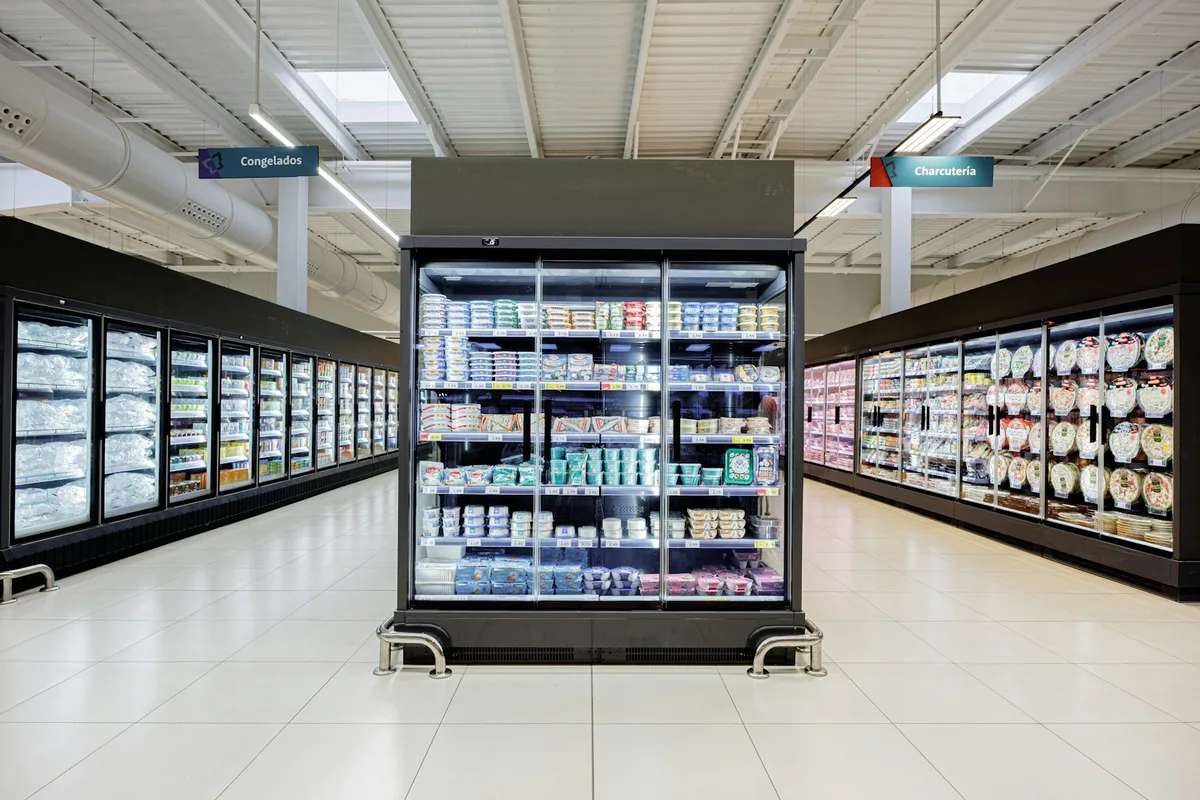
Cold Storage Property Investment in Australia
Cold storage and refrigerated warehouse property has become one of the most actively pursued specialist industrial sub-classes in Australia. Institutional capital has moved in behind four demand drivers at once: growing third-party logistics demand, supermarket and quick-commerce supply chain expansion, agricultural export growth, and pharmaceutical cold-chain requirements. Private investors can buy into the sub-class anywhere from single-tenant freestanding cold stores in the $5 million to $20 million range up to larger multi-tenant cold logistics facilities.
What you acquire here is not really a warehouse. It is an operator covenant, a refrigeration plant, and a power bill, wrapped in an insulated box. Price those three correctly and the underwriting follows.
Cold storage is industrial property with a refrigeration plant attached. The refrigeration plant is most of the value and most of the risk. A standard industrial DD on a cold store underestimates both.
What Cold Storage Property Is
Cold storage is refrigerated warehouse property that holds goods at controlled low temperatures. Three regimes cover most of the market:
- Chilled. 0°C to 4°C. For fresh produce, dairy, deli, and similar.
- Frozen. -18°C to -25°C. For frozen food, ice cream, and bulk frozen export goods.
- Blast frozen. -40°C or lower. For initial freezing of fresh product, then transferred to standard frozen storage.
Some buildings run a single temperature regime; multi-temperature facilities zone it separately. Work out which regime the building was built for, and how much flexibility it actually has.
1 Operator Covenant
Major third-party logistics (3PL) operators
Lineage Logistics (the largest cold storage operator globally), Americold, Emergent Cold (acquired by Lineage), Aerodrome Logistics, NQ Cold Stores. Strong covenants with institutional backing in some cases; private companies with substantial balance sheets in others.
Supermarket and FMCG operators
Coles and Woolworths run their own cold-chain distribution centres in some locations. Major FMCG companies (Goodman Fielder, Saputo, Bega) hold or lease cold storage for specific product lines.
Specialist operators
Pharmaceutical cold chain (Symbion, EBOS, DHL Pharma), meat processors (Teys, JBS, Australian Country Choice), and fresh produce wholesalers run specialist cold storage tied to their core business.
2 Building Specification
A cold store is built differently from an ambient shed in ways that go straight to value:
Insulation and envelope
Wall and roof insulation must hold a temperature differential of 20 to 40 degrees Celsius against external ambient. Insulated metal panels, typically 100 to 200 mm thick, are standard. Lose envelope integrity and you have both an operational and a financial problem.
Refrigeration plant
The cooling system, usually ammonia or HFC-based, is the operational heart of the facility. Plant capacity, age, redundancy (N+1 minimum), and energy efficiency all set the operational economics and the remaining useful life.
Floors and structure
Cold store floors have to cope with freezing and the structural movement that comes with it; sub-floor heating stops the ground freezing under deep-freeze facilities. Racking is specialised for cold-store operations.
Loading docks and air locks
Dock seals, air locks, and dock-level door systems control temperature loss during loading and unloading. Modern facilities use automated dock door systems and rapid-open dock doors.
3 The Power Cost Question
The plant runs continuously, so a cold store draws far more electricity per square metre than ambient industrial. Power is a major operating expense, and where grid electricity prices in Australia head next feeds straight into operator economics.
Power pass-through
Triple-net cold storage leases typically pass power costs to the tenant, which insulates the landlord from power cost variability over the lease term.
Solar and on-site generation
Many modern cold storage facilities carry rooftop solar PV. The benefit accrues to whoever paid for it; lease arrangements vary.
Refrigeration plant efficiency
Older plant is materially less energy-efficient than modern systems. Plant age and efficiency rating belong in the underwriting, because the next operator's economics depend on them.
4 Lease Structures
Typical terms
10 to 20 year initial term, with options to renew. Rent reviews are typically CPI plus a minimum, or fixed annual increases. Outgoings recovery is triple net, with the operator paying all outgoings including power.
Capex provisions
Refrigeration plant replacement, typically every 15 to 25 years for major components, is a major capital event. The lease should say whether landlord or tenant carries the cost, and how term and rent adjust around it.
5 Buyer-Side DD Steps
- Lease abstract. All terms, options, reviews, outgoings, and the capex provisions for refrigeration plant.
- Operator covenant. Audited financials, rent coverage, parent guarantee.
- Refrigeration plant inspection. Independent specialist review of plant age, condition, capacity, redundancy, and remaining useful life.
- Building envelope. Insulation panel condition, dock seal integrity, air lock function, ground heating systems.
- Power supply and metering. Capacity, redundancy, current consumption pattern, and solar integration if any.
- Environmental and refrigerant. Ammonia plant compliance, leak history, refrigerant phase-out timeline (HFC, particularly R404A, is being phased down under the Kigali Amendment).
- Catchment. Location relative to ports, retail distribution networks, and food processing clusters.
- Comparable sales. Recent cold storage transactions by covenant tier and submarket.
6 Yields and Pricing
Modern long-WALE cold storage with strong-covenant tenants prices at the tighter end of the industrial specialist spectrum. Older or short-WALE cold storage trades meaningfully wider, reflecting refrigeration plant replacement risk and operator covenant.
Frequently Asked Questions
How long does a cold store refrigeration plant last?
Major refrigeration components (compressors, condensers, evaporators) have economic lives of 15 to 25 years with proper maintenance. The full system runs 25 to 35 years before a major rebuild becomes necessary.
What is the refrigerant phase-out risk?
Hydrofluorocarbon refrigerants are being phased down under the Kigali Amendment to the Montreal Protocol. Older R404A systems will need refrigerant replacement or a plant rebuild over the next 10 to 15 years. The buyer-side review should price that.
Is cold storage suitable for an SMSF?
Generally yes, subject to the standard SMSF and LRBA rules. The refrigeration plant replacement risk is material and should be modelled into the SMSF's cash flow.
How does cold storage compare to ambient industrial on yields?
Modern long-WALE cold storage with strong covenant trades close to or slightly tighter than ambient industrial of comparable scale; specialist demand has compressed yields. Older cold storage trades wider, reflecting capex risk.