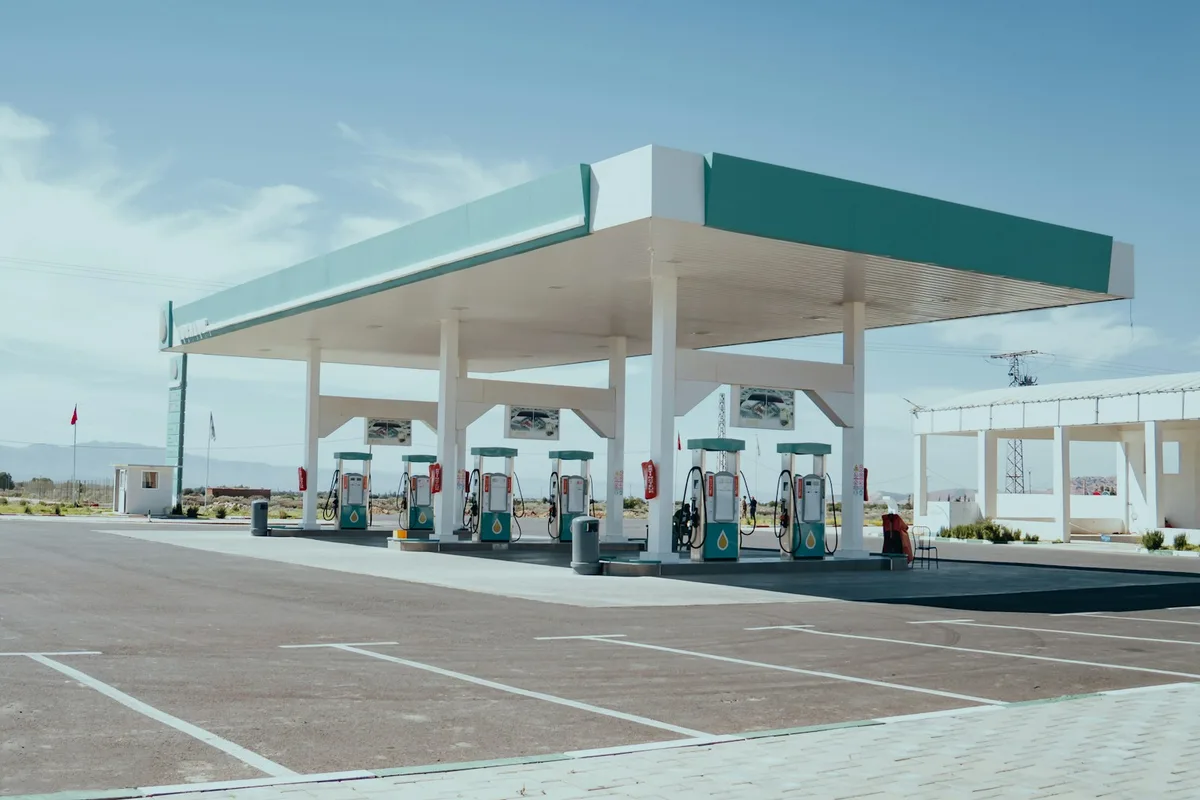
Service Station Property Investment in Australia
Service station property investment sits among the most distinctive commercial asset classes open to Australian private investors. Long-dated triple-net leases, national-covenant tenants, fixed annual rent reviews, and a well-defined operating template have made fuel retail a durable allocation in many commercial portfolios. The complications sit on the other side of the ledger: environmental liability that can exceed the building value, a long-cycle transition to electric vehicles that is real but uncertain in timing, and a regulatory and operating environment more specialised than standard commercial retail.
Underwriting one comes down to four questions: how strong the operator covenant is, what sits in the ground beneath the forecourt, how the lease is structured, and how the EV transition plays out across a long-WALE hold. Get those right and the rest is pricing.
You are buying a 15-year lease on a 1,500 square metre parcel with a fuel tank field underneath. The lease is the income, the tank field is the risk, the EV transition is the unknown, and all three need to be priced.
What a Service Station Investment Property Is
A service station property is typically a freestanding parcel of 1,000 to 4,000 square metres carrying a forecourt, a retail convenience kiosk, fuel pumps, and underground fuel storage tanks, leased on a long-dated agreement to a fuel retailer who runs the site under the relevant brand.
Three interlocking pieces drive the economics. The land is a highway, arterial-road, or high-traffic corner site whose value once the service station era ends depends on parcel size and zoning; most parcels carry meaningful alternative-use value as showroom retail, fast food, or mixed-use development. The lease runs a 15 to 30 year initial term with multiple options to renew, on a triple net structure, with the operator paying all outgoings and managing the site. The operator is a major fuel brand (BP, Shell, 7-Eleven, Caltex/Ampol, Mobil, EG Group) on a head lease, sometimes with a sub-lease to a franchisee.
1 The Operator Covenant Hierarchy
Major fuel retailers
BP Australia, Viva Energy (Shell brand), Ampol, 7-Eleven, Coles Express (operated by Viva), and Woolworths-EG sit at the strongest covenant tier in the sector. Listed or large private corporate balance sheets stand behind the lease.
Independent operators
Independent fuel operators (Astron, United Petroleum, Liberty Oil, Apco) run smaller national or regional networks. The covenant is private and read on the operator's own balance sheet.
Single-site franchisees
Some sites are leased to single-site franchisee operators under a parent-brand head lease. Without a parent guarantee, the practical covenant is the franchisee's own; with a parent guarantee, it is the major brand.
2 Lease Structures
Typical terms
Expect a 15 to 30 year initial term with two to four options to renew of 5 to 10 years each. Rent reviews are usually fixed annual increases of 3.0% to 4.0%, with market reviews at option exercise. Outgoings recovery is triple net.
Outgoings recovery
The operator pays council rates, land tax (single-holding basis), water, electricity, and insurance. Capital works, structural, roof, paving, and tank field replacement, usually fall to the landlord, with specific provisions limiting landlord liability for environmental costs the operator caused.
End-of-lease obligations
The lease sets out what the operator must do at lease end: remove tanks, remediate contamination to a defined standard, and surrender the site in a documented condition. These obligations are the buyer-side review point that gets less attention than it deserves, and that is a mistake.
3 Environmental Liability
Underground fuel storage tanks are the principal environmental risk. Historic tanks (pre-2000) carry a higher base rate of contamination than modern double-walled tanks. Soil and groundwater contamination from leaks, spills, or historic vapour migration can affect the parcel and its neighbours.
Phase 1 ESA
A Phase 1 Environmental Site Assessment is the buyer-side baseline. It reviews historic use, regulatory records (EPA notifications), and the visible condition of the tank field. A clean Phase 1 means no further investigation is required at the time of acquisition. A flagged Phase 1 escalates to Phase 2.
Phase 2 ESA
Soil bores, groundwater sampling, vapour testing: a Phase 2 reveals the actual contamination status. A result showing contamination above the relevant guidelines triggers remediation cost estimates and a buyer-side decision on whether the lease economics still work.
Indemnity structures
Contract conditions often carry vendor warranties on environmental status alongside operator indemnities for contamination caused during the lease. The buyer-side review reads the warranty period, the cap on the indemnity, and how enforceable it actually is against the operator.
4 The EV Transition
Battery-electric and hybrid vehicle market share has been rising in Australia, and the trajectory is well documented. The buyer-side question is not whether the transition is real, it is, but what it does to service station economics across a 15 to 30 year lease term.
The convenience economy
Modern service stations earn a substantial proportion of revenue from convenience retail, not fuel. A 7-Eleven, a BP Wild Bean Cafe, or a Coles Express draws meaningful gross margin from packaged food, beverages, and impulse purchases, and that income is largely independent of fuel volume.
EV charging integration
Major fuel retailers have been installing EV charging at flagship sites. The shift from fuel-only forecourt to mixed fuel-and-charging forecourt is under way; read the lease term against the operator's stated transition timetable.
The long-tail fuel question
Light vehicle fuel demand declines on most credible decarbonisation trajectories, but heavy vehicle and aviation fuel demand persists materially longer. A site on a heavy vehicle route carries a different exposure than a commuter-suburb site.
Alternative use
The worst case for a service station buyer is the operator surrendering at lease end and leaving the site needing full remediation before re-use. That remediation can run to six or seven figures depending on the extent of contamination. Price it into the exit assumption.
5 Yields and Pricing
Service station yields sit at the tighter end of the long-WALE specialist commercial spectrum. Major-fuel-brand long-WALE service stations price comparably to long-WALE childcare or large-format retail. Independent-operator or short-WALE sites trade meaningfully wider.
Pricing turns principally on covenant tier, lease length, and location, with environmental liability priced as a separate dimension.
6 Buyer-Side DD Steps
- Lease abstract and review. All terms, options, reviews, outgoings, capex caps, make-good, end-of-lease obligations.
- Operator covenant. Parent guarantee, head lease vs franchisee structure, rent coverage.
- Phase 1 ESA. Historic use, regulatory records, visible tank field condition.
- Phase 2 ESA if needed. Soil and groundwater testing.
- Tank field assessment. Age, double-walled vs single-walled, monitoring system.
- EV transition positioning. Operator's stated transition plan, site suitability for charging integration.
- Alternative-use review. Zoning, parcel size, redevelopment scenarios.
- Comparable sales evidence. Recent service station sales by covenant tier and lease length.
7 Risks Specific to Service Stations
Major operator covenant change
Sector consolidation and brand changes (EG Group acquiring Woolworths Petrol, Ampol replacing the Caltex brand) can shift the practical covenant. Most lease arrangements survive these changes intact; the buyer-side review tests for assignment provisions and parent guarantee continuity.
Environmental incident during lease
A spill or leak during the lease creates contamination the operator is contractually responsible for. Whether that responsibility means anything depends on the operator's solvency and the lease's indemnity provisions.
Long-cycle obsolescence
If the EV transition accelerates faster than the operator's reinvestment plan, actual income may underperform contractual income before lease end. The yield premium relative to non-fuel long-WALE assets is partly compensation for this risk.
Frequently Asked Questions
Is a service station suitable for an SMSF?
Generally yes, subject to the standard SMSF and LRBA rules. The single-acquirable-asset test is usually satisfied. Environmental liability needs particular care in the SMSF context, because the fund cannot easily absorb a large remediation cost.
What happens at lease end if the operator does not renew?
The building plus tank field goes to market for re-lease to another operator, or for alternative use after remediation. The exit value depends heavily on the parcel's alternative-use potential and the remediation cost.
How long do underground fuel tanks last?
Modern double-walled fibreglass or steel tanks have working lives of 30 to 40 years with appropriate monitoring and maintenance. Older single-walled steel tanks have shorter lives and higher leak risk.
Can I see the tank-monitoring records?
Yes. The operator and the EPA both hold monitoring records. Request them as part of DD; a refusal is a material flag.