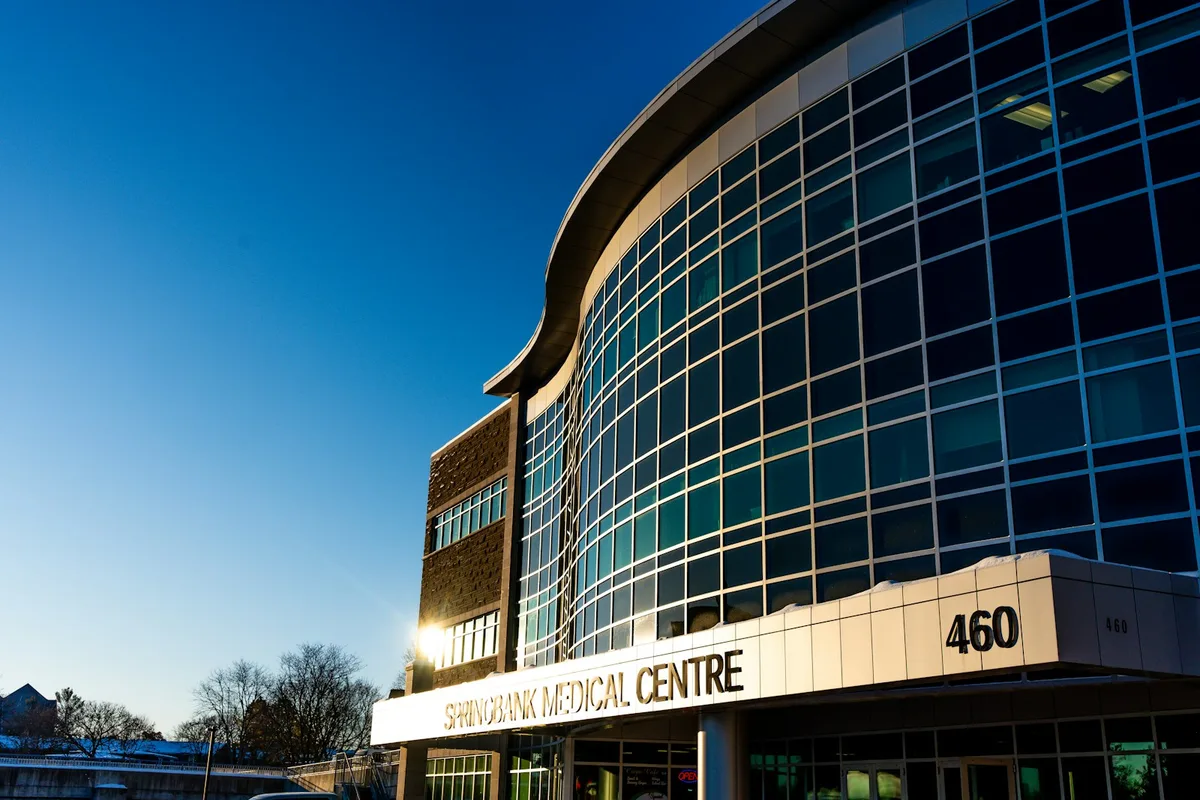
Medical Centre Property Investment in Australia
Medical centre property earns its place in a private investor's commercial allocation on three things: long WALE, fit-out-heavy premises that tie a tenant to the building, and income that is not as cyclically exposed as office or retail. Demographic tailwinds, revenue underwritten by Medicare, and the high switching cost of moving a practice have made medical consulting one of the more defensive commercial niches.
What you buy is not the medical practice. It is the building and the lease behind it, and the covenant sitting on that lease is where medical property is won or lost. The four principal sub-asset classes (GP, allied health, day surgery, specialist consulting) price differently, and the underwriting runs past a standard commercial DD.
A practice that has sunk money into fit-out, built its patient relationships, and earned accreditation at one address does not move cheaply. That stickiness underpins the yield. It does not do the covenant work for you.
The Four Medical Sub-Asset Classes
General Practice (GP)
Multi-doctor GP clinics running three to fifteen consulting rooms, plus treatment rooms, pathology collection, and waiting areas. The tenant is usually a corporate-backed group (Healius, Sonic Healthcare, IPN, ForHealth) or a private practice group operating one to ten clinics. Rent comes from the practice entity, so covenant strength tracks the parent.
Allied Health
Physiotherapy, podiatry, psychology, dietetics, audiology, and other non-medical-specialist practices. Premises are smaller and often sit alongside GP or specialist consulting. The covenant per tenancy is smaller, tenant turnover is higher, and you re-lease more often.
Day Surgery and Specialist Consulting
Day-surgery facilities, typically operated by Healthe Care, Healius, or private hospital operators, and specialist consulting rooms attached to or near hospital precincts. Heavier fit-out, longer leases, stronger covenants. Pricing here is institutional.
Hospital Precinct Adjacency
Commercial property within a 2 km radius of a major hospital trades as a related but distinct sub-segment. The covenant pool runs deeper (specialist consulting, pathology, radiology, diagnostic imaging) and the income streams are partly Medicare-funded.
1 The Operator Covenant Hierarchy
Corporate-backed national operators
Sonic Healthcare, Healius, ForHealth (formerly Tristar Medical), IPN, and Primary Health dominate corporate GP and pathology. You get a listed covenant on the parent, audited financials, and rent obligations consolidated across a national network. This is the strongest covenant tier in medical.
Private-equity-backed regional operators
Several private-equity-owned medical operators run portfolios of GP, allied health, and specialist consulting. The covenant is generally strong, but the buyer-side review has to read the holding-company structure and work out who actually guarantees the rent.
Private practice groups
Two-to-ten-doctor practices run by a small group of partners. The covenant is the practice itself, often with no parent company guarantee, and rent is paid out of practice cash flow.
Sole practitioners and small allied health
Single-practitioner consulting rooms or small allied health tenancies. The individual covenant is smaller, so rent coverage and the principal's personal balance sheet are what you actually underwrite.
2 Lease Structures
Medical consulting leases run longer than other commercial sub-classes, which reflects the fit-out cost and the difficulty of switching premises.
Typical terms
Initial terms of 5 to 15 years, with one to three options to renew. Rent reviews are usually fixed annual increases of 3.0% to 3.5%, or CPI plus a minimum. Outgoings recovery is typically a net or near-net structure, with the tenant paying outgoings on a single-holding basis.
The fit-out question
Medical fit-outs are expensive: consulting room joinery, treatment rooms with plumbing, X-ray shielding for radiology, sterile zones for day surgery. Most leases put the fit-out on the tenant to install at their own cost and to remove or surrender it at lease end. Some carry a landlord contribution provision.
Make good
Make-good obligations on medical premises can be substantial. Removal of fit-out, treatment of contaminated waste pipes, and statutory clearance to sell premises with prior medical use are all common.
3 Catchment and Demand Drivers
Demographics
Medical demand tracks the over-55 population in the catchment. ABS data on age distribution, projected population growth, and household composition all feed the demand model.
Provider density
GP-to-population ratios vary widely between catchments. The ABS and the Department of Health publish workforce data, and a catchment that is undersupplied for GPs is structurally easier for an operator to fill consulting rooms in.
Hospital precinct effects
Specialist consulting demand rises within 2 km of a major hospital. Pathology, radiology, diagnostic imaging, and allied health all have stronger catchment economics near a hospital precinct.
Public transport and parking
Patient access is a practical demand driver. A medical centre with poor parking and limited public transport will underperform a comparable centre with better access, whatever the operator.
4 The Medicare Funding Layer
A substantial proportion of medical centre tenant revenue comes from Medicare rebates rather than direct patient payment. The Medicare Benefits Schedule (MBS) sets the rebate for each medical service.
For a landlord, that funding layer cuts three ways:
- The rent is ultimately funded by a federal government-administered revenue stream that has been highly durable over decades.
- MBS reviews and freezes shift practice economics. A freeze that compresses GP margins can lift rent-to-revenue ratios.
- Bulk-billing rates drive tenant cash flow. A practice that bulk-bills 100% of patients runs on different economics to one that bulk-bills 40% and charges gap fees on the rest.
5 Yields and Pricing
Medical centre yields sit at the tighter end of the commercial spectrum, which reflects the durable income and the long WALE. Corporate-tenant medical with 10 years plus WALE trades close to long-WALE retail benchmarks. Private-tenant, smaller-scale medical trades 100 to 200 basis points wider.
Pricing differentiation is principally about covenant tier and lease length, and secondarily about catchment quality and building specification.
6 Buyer-Side DD Steps
- Lease abstract and review. All terms, options, reviews, outgoings, capex caps, make-good, fit-out responsibility.
- Tenant covenant. Audited financials where available, rent coverage ratio, parent company guarantee.
- Catchment analysis. Demographics, GP density, hospital precinct adjacency, competing medical premises.
- Building condition. Independent consultant on structure, HVAC, plumbing (X-ray shielding, sterile zones if relevant), accessibility compliance, parking.
- Planning and use approval. Council consent for medical use; some catchments have explicit medical consent conditions that limit use.
- Practice operating context. Mode of operation (bulk-bill, mixed billing, private), GP retention indicators, Medicare provider numbers attached to the premises.
- Comparable sales. Recent medical sales by sub-class and covenant tier.
7 Risks Specific to Medical Property
Practice closure or relocation
A single-tenant medical centre with a corporate parent carries lower closure risk, but it is not immune. A practice that relocates at lease end leaves the building vacant, and re-leasing to another medical operator is the practical exit. The replacement covenant pool is narrower than it is for general office.
Regulatory and accreditation changes
Accreditation standards for general practice, day surgery, and specialist consulting can change. New requirements that force building upgrades, such as infection control, sterilisation, or accessibility, can fall to the landlord depending on the lease structure.
Concentration risk
A medical building heavily weighted to one corporate operator is a concentrated covenant. Institutional investors can diversify across operators at the portfolio level. For a private buyer at the single-asset level, covenant quality is the principal protection.
Frequently Asked Questions
Is medical centre property suitable for an SMSF?
Generally yes. The single-acquirable-asset test is usually satisfied, the long lease provides stable income, and an LRBA-funded acquisition is well-precedented. Operator covenant DD is critical before you commit.
What is the typical yield range for medical centre property in 2026?
Corporate-tenant long-WALE medical typically prices at the tighter end of the commercial yield spectrum, and private-tenant smaller medical sits wider. Yield bands move with the cycle, so benchmark current values against a published commercial yield series.
Does the landlord need to be involved in tenant operations?
No. The landlord owns the property; the tenant runs the medical practice. It is a standard commercial lease relationship. Landlord involvement is limited to property maintenance, capex obligations, and renewal negotiations.
What happens if the GP loses their Medicare provider number?
The provider number belongs to the doctor, not the building. A practice can carry on with replacement doctors. The landlord's exposure is that the practice's overall economics suffer if recruitment is difficult, but the practice itself remains the tenant entity.