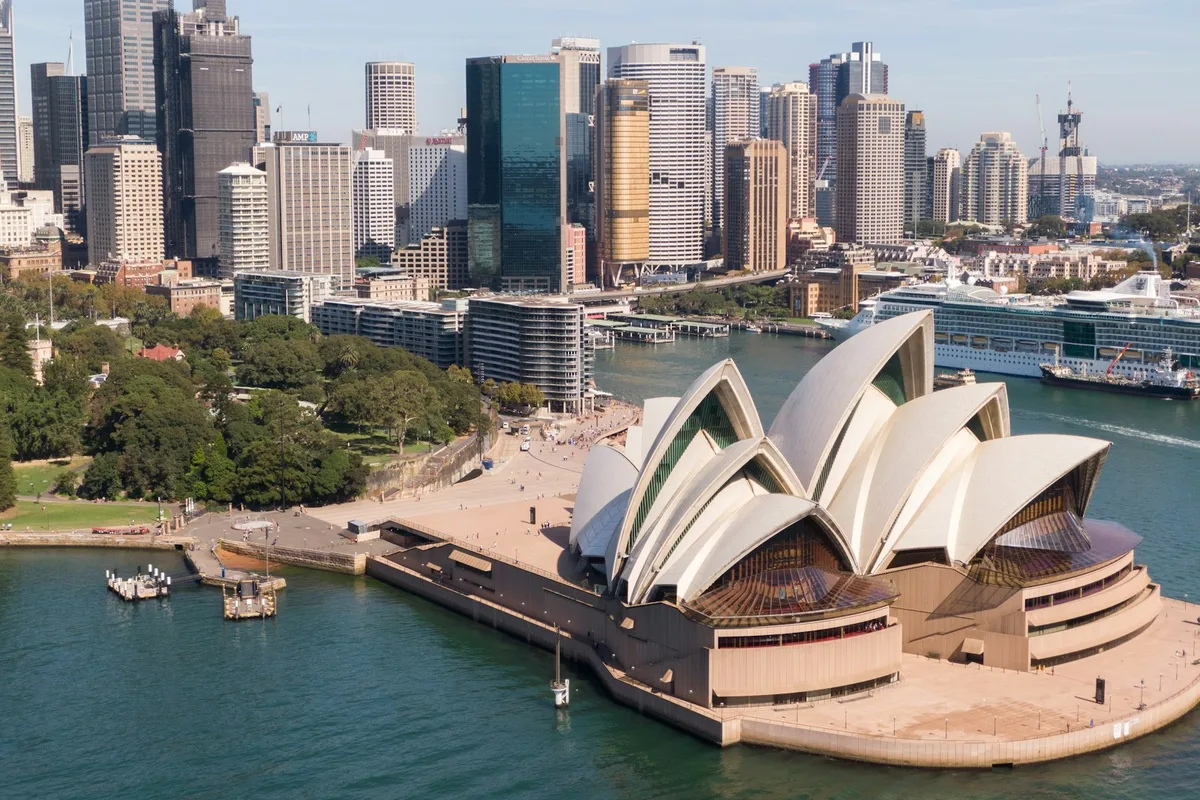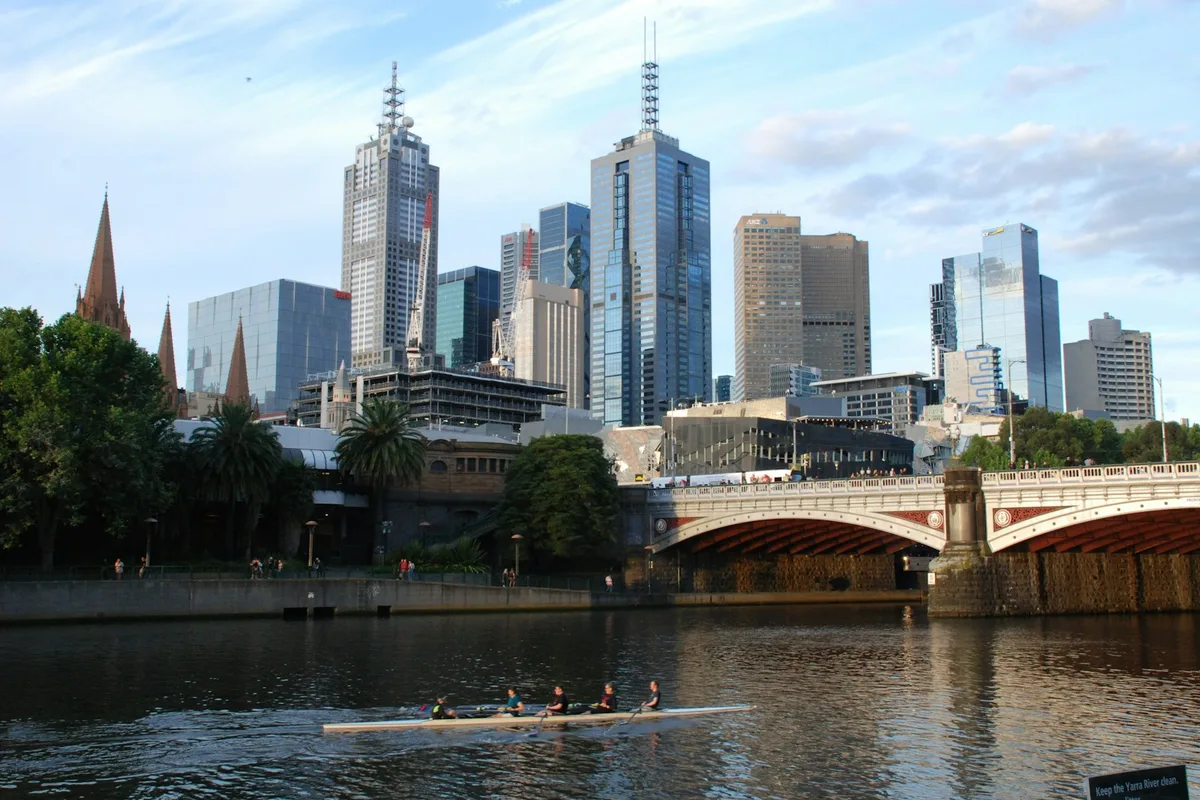
Melbourne vs Sydney: Which Property Market Wins in 2026?
Melbourne or Sydney? Every Australian property investment conversation circles back to it, and has for decades. Both cities have delivered strong long-term returns, both pull in significant population growth, and both run deep, liquid markets across residential, commercial and industrial sectors.
Neither city is universally better for investment. The right choice turns on your strategy, your budget, your risk tolerance and the asset class you are targeting. The numbers below tell you which one fits where you are now.
This is general information only, not financial advice. Property investment carries risk, and past performance is not a reliable indicator of future results. Always seek independent professional advice before making investment decisions.
1 The Two-City Question
Australia's property market gets talked about as one thing. Sydney and Melbourne are two markets, with separate price cycles, separate supply dynamics and separate demand drivers. They track each other loosely, then diverge, usually when rates move fast or policy shifts.
Most investors building a national portfolio end up holding in both cities. So the real question is not which city forever, but which city first, given your strategy and capital position right now. That question has useful answers. The binary debate does not.
2 Price Comparison: The Entry Point Gap
Price is the first thing that separates the two. Sydney is the most expensive capital city market in Australia, by a wide margin.
CoreLogic data from late 2025 puts Sydney's median house price at approximately $1.4 million and Melbourne's at around $920,000. A Sydney house carries a premium of roughly 52% over its Melbourne equivalent.
Units narrow the gap without closing it. Domain has Sydney's median unit price at approximately $800,000 against Melbourne at around $560,000, still a 43% premium for Sydney.
| Metric | Sydney | Melbourne |
|---|---|---|
| Median house price | ~$1.4M | ~$920K |
| Median unit price | ~$800K | ~$560K |
| Entry-level house (outer ring) | ~$850K-$1M | ~$550K-$700K |
| Entry-level unit | ~$550K-$650K | ~$380K-$480K |
That gap does real work. A 20% deposit on a median Sydney house needs approximately $280,000 in capital against $184,000 in Melbourne. For a first-time investor, or anyone building a portfolio on limited equity, the deposit alone can decide which market is even reachable.
3 Rental Yields: Melbourne's Advantage
Melbourne has long returned higher gross rental yields than Sydney across most residential asset classes. Lower entry prices relative to the rent you can charge produce it, and it favours cash-flow-focused investors.
Publicly available data from CoreLogic and SQM Research through late 2025 and into early 2026 puts approximate gross yield ranges here:
| Asset Class | Sydney Gross Yield | Melbourne Gross Yield |
|---|---|---|
| Houses | 2.5%-3.5% | 3.5%-4.5% |
| Units | 3.5%-4.5% | 4.5%-5.5% |
These are broad ranges, and individual suburbs sit well outside them. Melbourne's inner-city apartment market has seen yields compress in pockets where supply is heavy. Well-located Sydney units in undersupplied corridors run past the top of the range.
The yield gap matters most if you need the property cash-flow neutral or positive from day one. At current interest rate levels, a Melbourne investment property clears that bar far more often than a comparable Sydney asset, simply because the rent-to-price ratio is more favourable.
4 Capital Growth: Sydney's Historical Edge
Over extended timeframes, 20 years or more, Sydney has generally beaten Melbourne on capital growth. CoreLogic's long-run data has Sydney dwelling values compounding at approximately 6.5%-7% a year over the past two decades against roughly 5.5%-6% for Melbourne.
That edge comes with more volatility. Sydney rises faster in the upswing and corrects harder in the downturn. The 2017-2019 correction took Sydney prices down approximately 15% peak to trough; Melbourne's fall was closer to 11%. Sydney also led the post-COVID recovery with sharper gains, then plateaued earlier.
Melbourne's growth profile has been steadier: fewer dramatic peaks, shallower troughs. If your risk tolerance is lower or your intended hold shorter, that consistency can be worth more than Sydney's higher headline growth rate.
Capital growth is never guaranteed. Both cities have gone through extended stretches of flat or falling prices. Any strategy that assumes prices only ever climb is built to break.
5 Growth Drivers and Infrastructure
Sydney
Sydney's growth story is a supply story. Geography boxes the city in: the Blue Mountains to the west, national parks to the north, water to the east and south. That leaves little developable land in established areas, and the squeeze underpins long-term price growth.
Several projects are reshaping where Sydney's investment money goes:
- Sydney Metro West. A new underground line linking the CBD to Parramatta, with stations at major employment and residential nodes. It is repricing property the length of the corridor.
- Western Sydney International Airport. The new airport at Badgerys Creek, due to open in the coming years, is seeding a whole new economic precinct in Western Sydney, with real consequences for residential and industrial property demand nearby.
- Finance and technology sectors. Sydney is still Australia's financial capital and its largest technology employment hub. Both sectors put high-income demand under residential and commercial property.
- International migration. Sydney takes the largest share of Australia's overseas migration year after year, which keeps steady pressure on housing, and on rental accommodation most of all.
Melbourne
Melbourne's growth story is about people. It has been Australia's fastest-growing capital city for several years, on both international migration and interstate movement. Priced below Sydney, it keeps pulling in residents and businesses alike.
The infrastructure and demand drivers that matter:
- Suburban Rail Loop. A new orbital rail network stitching together Melbourne's middle suburbs. The first stage (Cheltenham to Box Hill) is underway and is expected to significantly improve accessibility and property values in suburbs along the route.
- Metro Tunnel. Now operational, the Metro Tunnel has expanded the capacity of Melbourne's rail network and improved connectivity to key employment precincts, particularly in the inner south-east and west.
- Population growth. ABS population projections have Melbourne overtaking Sydney as Australia's largest city within the next decade. That trajectory underpins long-term demand across all property classes.
- Interstate migration. Melbourne's relative affordability keeps drawing buyers and renters out of Sydney, with many remote workers choosing Melbourne's lifestyle at a lower cost of living.
- Education and health sectors. Melbourne's concentration of universities and major hospital precincts creates consistent demand for housing and commercial space in the surrounding suburbs.
6 Commercial and Industrial Markets
For commercial or industrial property, the Melbourne-Sydney comparison shifts. Industrial and logistics has been one of the strongest-performing asset classes in the country over the past five years.
Industrial and Logistics
Melbourne's western suburbs have become one of Australia's most significant logistics corridors. Suburbs such as Truganina, Derrimut, and Laverton North have drawn major distribution centres and e-commerce fulfilment facilities, pulled in by the road network and the Port of Melbourne.
Sydney's western logistics corridor, centred on Wetherill Park, Eastern Creek, and Prestons, has the same fundamentals at significantly higher price points. Industry reports have industrial land values in Sydney's western corridor climbing considerably faster than Melbourne's equivalent areas, which pushes entry costs substantially higher.
| Metric | Sydney West | Melbourne West |
|---|---|---|
| Typical industrial yield | 4.5%-5.5% | 5.0%-6.5% |
| Entry cost (small warehouse) | $2.5M-$5M+ | $1.5M-$3.5M |
| Vacancy rate (prime) | Very low | Low, but rising slightly |
Melbourne's industrial market gets you in cheaper and yields more, which suits investors after income-producing commercial assets without Sydney's capital requirements. Sydney's tighter supply constraints and proximity to a larger consumer market make the stronger case for long-term capital appreciation.
Office and Retail
Both cities' CBD office markets have changed structurally since 2020: higher vacancy rates, tenants shifting toward flexible, high-quality space. Suburban office has held up better, particularly in well-connected nodes like Parramatta (Sydney) and Box Hill and South Melbourne (Melbourne).
Retail property performance is highly location-specific in both cities and needs detailed local analysis that goes beyond a city-level comparison.
7 Risks to Consider
Every market carries risk. An honest read means naming it plainly.
Sydney Risks
- Affordability ceiling. Sydney's prices sit at a level where further growth depends on continued wage growth, population demand and access to finance. Tighten lending standards or hold rates high for long, and the most expensive market feels it first.
- Interest rate sensitivity. Higher-priced assets carry larger loans, so Sydney reacts harder to rate moves in absolute dollar terms. A one percentage point rate increase costs materially more on a $1.2 million mortgage than a $750,000 one.
- Rental affordability pressure. Political pressure around rental affordability in Sydney is building, and any response, whether through tenancy law changes, tax settings or planning regulations, can eat into investor returns.
Melbourne Risks
- Inner-city apartment oversupply. Melbourne ran a significant apartment construction boom through the 2010s, and precincts like Southbank, Docklands and parts of the CBD still carry elevated vacancy and subdued capital growth as a result. In the unit market, be ruthless about location and building quality.
- Land tax changes. The Victorian government has introduced a number of land tax changes in recent years, including the COVID debt levy and adjustments to thresholds and rates. Those extra holding costs reduce net yields, and some investors name them as a reason to favour other states.
- Economic diversification. Melbourne's economy is well-diversified, but it leans more on sectors like education (international students) and manufacturing than Sydney's finance-heavy base. Shift immigration policy or global education demand and Melbourne's population growth trajectory can slow.
8 Which City Suits Your Strategy?
Rather than declaring a winner, map each city's strengths against the strategy you are actually running.
If your priority is rental yield and cash flow, Melbourne is generally the stronger choice. Lower entry prices and higher gross yields make a cash-flow-neutral or positive position easier to reach, particularly for houses in the middle and outer ring suburbs. Melbourne units in well-located, low-supply areas can also deliver attractive yields.
If your priority is long-term capital growth, Sydney holds the historical edge, on the back of its structural supply constraints and concentration of high-income employment. You have to be comfortable with the higher entry cost and the likelihood of sharper cyclical corrections along the way.
If you are building a diversified portfolio, hold assets in both markets. The two cities do not always move in lockstep, which gives you a degree of geographic diversification. A common approach is to start in the more affordable market to build equity, then use that equity to enter the higher-priced one.
If you are targeting commercial or industrial assets, Melbourne's western logistics corridor offers a more accessible entry point with solid yields. Sydney's equivalent corridor is more expensive but benefits from tighter supply. For smaller investors entering the commercial space for the first time, Melbourne's price point is often the realistic one.
If you are investing through an SMSF, the borrowing constraints of limited recourse borrowing arrangements (LRBAs) make the deposit and cash-flow requirements critical. Melbourne's lower price points and higher yields often make SMSF property investment more feasible on both compliance and cash flow.
The best investment is rarely the market with the highest past returns. It is the one that aligns with your financial position, your risk tolerance and your clearly defined investment objectives.
Final Thoughts
Melbourne and Sydney will both continue to be strong property markets over the long term. Australia's population growth, urbanisation trends and structural housing undersupply support that view. The question was never whether to invest in either city. It is which city best serves your particular goals at this particular point in your investment journey.
The data in this article draws on publicly available information from CoreLogic, Domain, SQM Research and the Australian Bureau of Statistics. Market conditions change, and the figures cited here reflect a point in time. Verify current data before making investment decisions, and seek advice from qualified professionals, including financial advisers, tax advisers and property specialists, before committing capital.
Disclaimer: This article is general information only and does not constitute financial, tax, or investment advice. Bold Property Group is a buyer's advocacy firm, not a licensed financial adviser. The information presented reflects publicly available market data and general market commentary. Individual circumstances vary, and you should obtain independent professional advice tailored to your situation before making any investment decision.